Forestry mulching / The Wildwood Journal
Will trees and brush grow back after forestry mulching?
Forestry mulching opens up overgrown land, but follow-up matters. Learn why regrowth happens and how to plan maintenance after your clearing project.
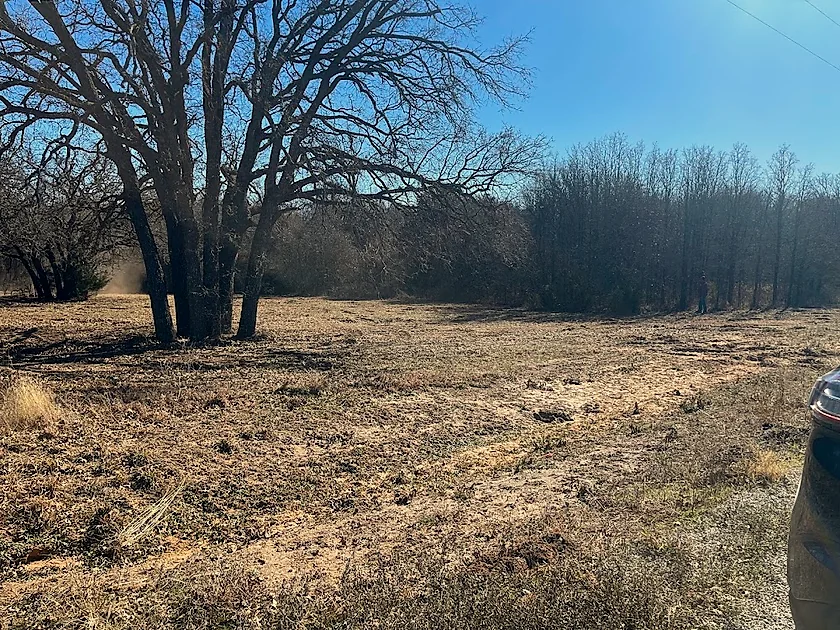
Yes, some trees and brush can grow back after forestry mulching. Cutting the visible growth does not necessarily kill the root system, and new plants may also establish from seed. Mulching opens the property; keeping it open requires a maintenance plan matched to the plants and your intended use.
The day a property opens up can feel like getting your land back. You can see through areas that were hidden, reach places that were difficult to access, and start planning what comes next. That fresh result is also the right moment to think about maintenance.
The practical question is not whether your property will ever grow vegetation again. It is what kind of growth you want, where you want it, and how you will keep unwanted woody growth from taking over the areas you just reclaimed.
Why does brush return?
University of Illinois Extension explains that cutting many woody invasive plants leaves living roots that can produce new shoots. Some species respond particularly vigorously. Removing the visible stems therefore does not automatically finish the job of controlling the plant.
That is why identifying the dominant unwanted plants matters. A property covered in one persistent invasive shrub may need a different follow-up plan from a mixed patch of ordinary young trees. If identification is uncertain, local Extension guidance can help you decide what needs closer attention before choosing a control method.
Further reading: Illinois Extension: invasive plants and responses to cutting
What does the mulch layer change?
Mulching leaves processed vegetation on the ground. Fecon describes the resulting surface as managed ground with wood material remaining, rather than an immediately finished lawn. It is helpful to establish that expectation before the first machine arrives.
A visible mulch layer should not be treated as proof that every unwanted plant is gone permanently. Evaluate the property over time. Watch the places where brush was densest, the edges next to uncleared growth, and the routes you want to keep usable.
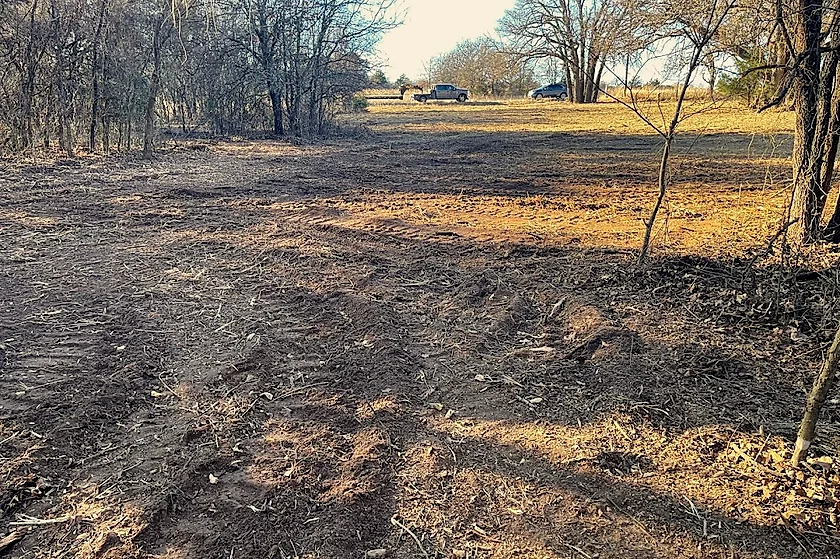
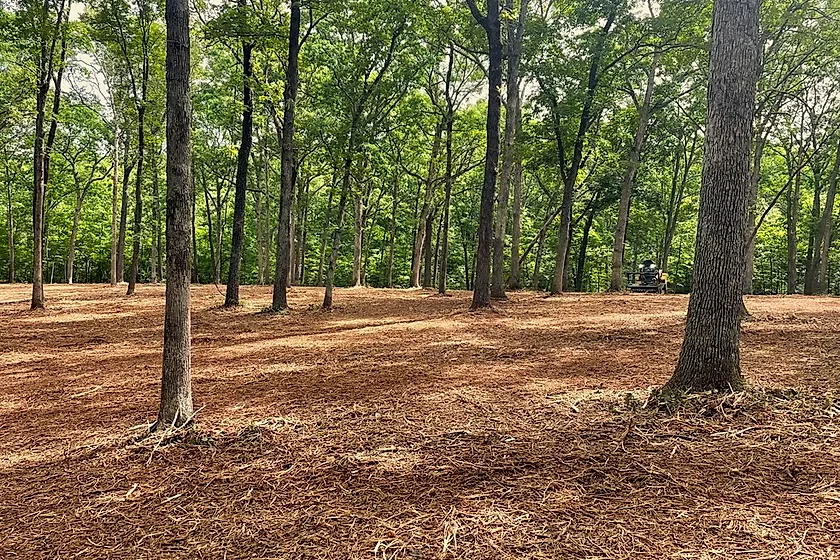
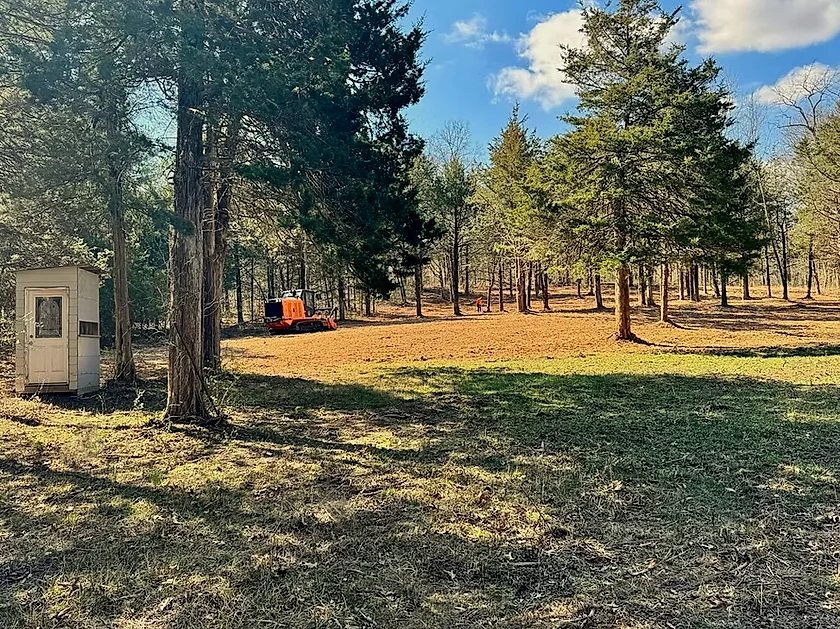
When comparing photographs, remember that an immediate after image answers “What did the area look like when cleared?” It does not answer “What will it look like next summer?” The photos in this guide are original Wildwood Forge project images; they are not evidence of a particular long-term maintenance outcome.
Further reading: Fecon: what a property looks like after mulching
Choose the end use before choosing maintenance
A woodland trail, a fence line, and an open field edge are different kinds of space. Write down the purpose of each cleared area so you can judge new growth against a useful goal. A few low plants beside a woodland path may be acceptable, while woody stems in the travel route may need attention.
Maintenance should fit that goal and the ground conditions. Do not assume the entire cleared property can immediately be maintained with ordinary mowing equipment. Discuss remaining material, obstacles, access, and the surface before deciding which equipment or service is appropriate.
| Area | Useful follow-up question |
|---|---|
| Woodland trail | Is the intended route still clear and wide enough for its planned use? |
| Fence line | Can the fence be seen and reached for inspection? |
| Field edge | Is woody growth spreading back into the area you want open? |
| Selective woodland clearing | Are unwanted stems returning around the trees you retained? |
Build a simple follow-up plan
Take a few photographs from repeatable viewpoints after clearing. Revisit those same spots during the growing season so changes are easier to notice. Keep notes about where new shoots are appearing instead of relying on a general impression that the whole property is growing back.
Address small patches while they are easy to identify and reach. The appropriate response depends on the species and the site. For persistent invasive plants, ask Extension or a qualified vegetation-management professional for a control plan. This guide does not prescribe chemical treatments or establish that any particular treatment is included in a Wildwood Forge estimate.
- Keep the cleared-area map and note the spaces you intend to keep open.
- Identify recurring unwanted plants before choosing a response.
- Inspect access routes and boundaries regularly during active growth.
- Photograph new patches from the same locations over time.
- Discuss follow-up work before the brush becomes difficult to reach again.
Set realistic expectations from the beginning
Ask a clearing contractor two separate questions: “What will this work remove now?” and “What maintenance should I plan for afterward?” The answers help distinguish the initial project from the longer-term responsibility of managing the property. A clear estimate should not leave you assuming that a one-time visit prevents all future growth.
Share any history you have with the land. Mention whether the same patch has been cut before, whether a particular plant returns quickly, and which areas have been difficult to maintain. Those observations help frame a useful discussion even when you do not know every plant’s name.
Wildwood Forge provides forestry mulching, brush removal, and field reclamation across Southern Illinois and Western Kentucky. Tell us what has taken over and how you want to use the ground. We can discuss the initial clearing scope and the follow-up questions to resolve before you get started.