Forestry mulching / The Wildwood Journal
Forestry mulching vs. land clearing: which fits your property?
Compare forestry mulching with other land clearing approaches. Start with your property’s intended use, retained trees, material, and required finish.
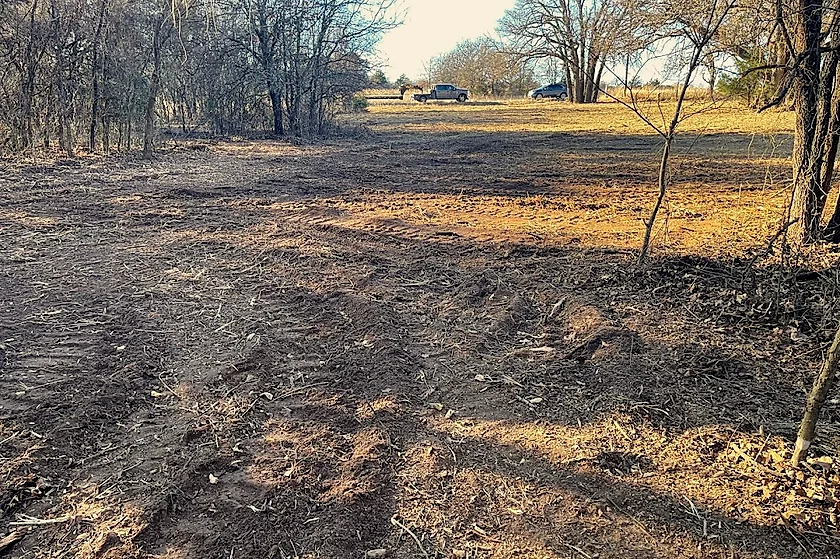
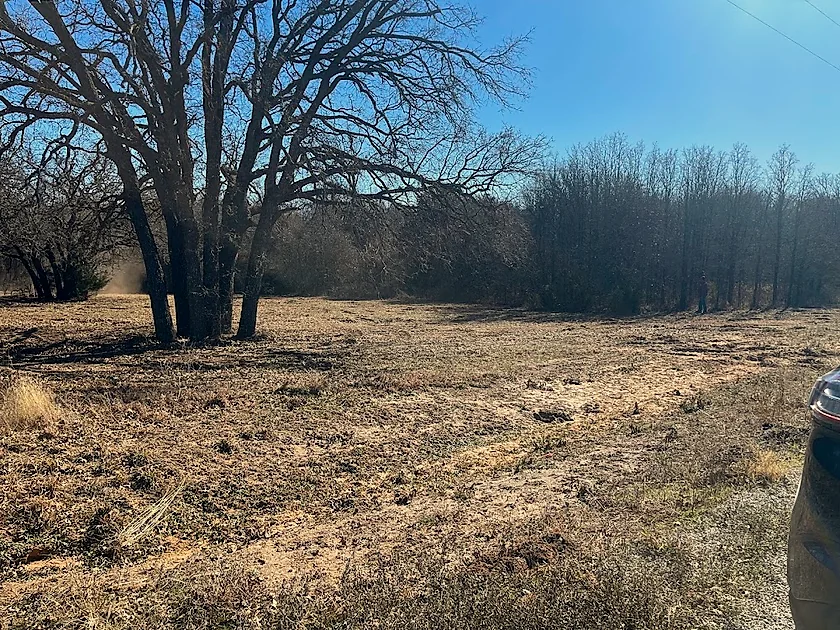
Forestry mulching is one method of land clearing. It processes vegetation into material left on site and can suit selective brush clearing and access projects. If the plan requires large-tree handling, root removal, earthmoving, or a different final surface, discuss a broader clearing scope. The right choice starts with what the land needs to become.
“Mulching or land clearing?” sounds like a choice between two completely separate services. In practice, land clearing is the wider job category, and forestry mulching is one way to accomplish part or all of it.
That distinction matters when you request estimates. Two contractors may both offer to clear the same area while planning very different end results. Describe the intended use of the property before deciding which equipment or method belongs in the scope.
How do the approaches differ?
A mulching plan focuses on processing vegetation in place. Other clearing plans may involve cutting and moving material, handling larger pieces separately, or additional work below the surface. What happens to the vegetation and what remains afterward should be explicit in the estimate.
There is no single “traditional clearing” package shared by every contractor. Ask what the term includes in your quote. A machine name alone does not tell you whether material will remain, be piled, or be removed, or whether roots and stumps are included.
| Question | Forestry mulching scope | Broader clearing scope |
|---|---|---|
| What happens to vegetation? | Processed material generally stays on the property. | Handling and disposal depend on the agreed plan. |
| Can trees remain? | Retained trees can be part of a selective plan. | Retained areas should also be identified before work. |
| Are roots removed? | Do not assume root excavation is included. | Confirm any root or stump work separately. |
| Is the site construction-ready? | Vegetation removal alone does not establish that. | The next use may require additional site work and checks. |
| Which costs less? | Compare the complete result you need. | Compare the same boundaries, finish, and inclusions. |
When is forestry mulching worth considering?
Consider mulching when your main goal is to reclaim access, reduce unwanted understory, or open an area while retaining selected trees. Start the conversation with the actual use: a route to a hunting spot, room to inspect a boundary, or woodland you can move through more easily.
Keep the finished surface in mind. You are asking for vegetation management, and the material left behind is part of the result. If you picture a lawn, a finished driveway, or a foundation area, make that expectation clear so the full project can be discussed before the scope is set.
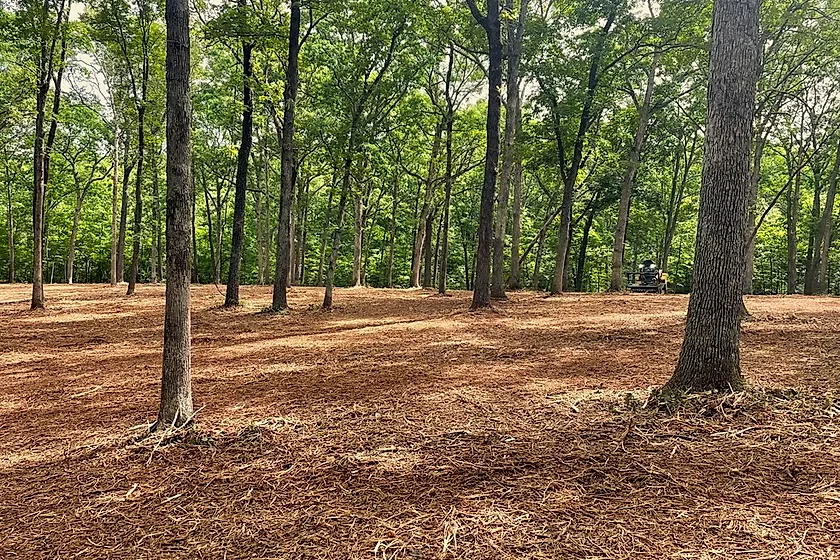
The Vienna photo in this article shows open ground beneath retained mature trees. It is a useful visual reference for discussing the kind of woodland character you want to preserve. It does not establish that the same result or process fits every parcel.
When should you discuss a broader clearing plan?
Bring up larger trees, extensive fallen material, obstacles, roots, and future construction early. Do not leave these details until a crew is on site. A clearing estimate needs to identify which parts of the project can be handled together and which need a separate evaluation.
For land intended for a building or another permanent improvement, explain what the next contractor needs. Vegetation clearing is only one part of preparing land for a new use. Confirm the required handoff condition instead of assuming that the phrase “site prep” includes every later task.
If you are unsure how far to take the work, request a staged plan. Opening access first may let you understand the rest of the property more clearly before committing to a larger scope. Treat that as a decision to discuss for your site, not a universal sequence.
Compare complete results, not equipment labels
Put each proposal beside the same marked map and written goal. Check what is removed, what stays, where the material ends up, and how the finished area will be reviewed. A lower initial number can cover less work; a higher one can also include work you do not need.
Bobcat’s attachment guidance distinguishes mulchers that process vegetation on site from chippers used to reduce material for handling or disposal. That basic difference is a reminder to ask about the whole material plan, not just the first cutting step.
- What use must the cleared area support when the project is complete?
- Which trees, screens, boundaries, and features should remain?
- What happens to the processed or removed vegetation?
- What will remain at or below ground level?
- Which follow-up tasks are outside this estimate?
Further reading: Bobcat: mulchers, chippers, and material handling
Choose the method around your property
You may not need one method across an entire parcel. A property can contain a brushy access route, a dense corner, and a few larger obstacles. Describe those areas separately and ask which approach fits each one. This makes it easier to set priorities and avoid an all-or-nothing decision.
Wildwood Forge offers forestry mulching and land clearing across Southern Illinois and Western Kentucky, including the counties and communities linked below. Send a few photos, your location, and a description of what you want the land to become. Your free estimate can then focus on the result that matters to you.