Forestry mulching / The Wildwood Journal
How big a tree can a forestry mulcher handle?
Tree diameter is only part of the answer. Learn how mulcher ratings, equipment, tree condition, and the surrounding property affect the right clearing method.
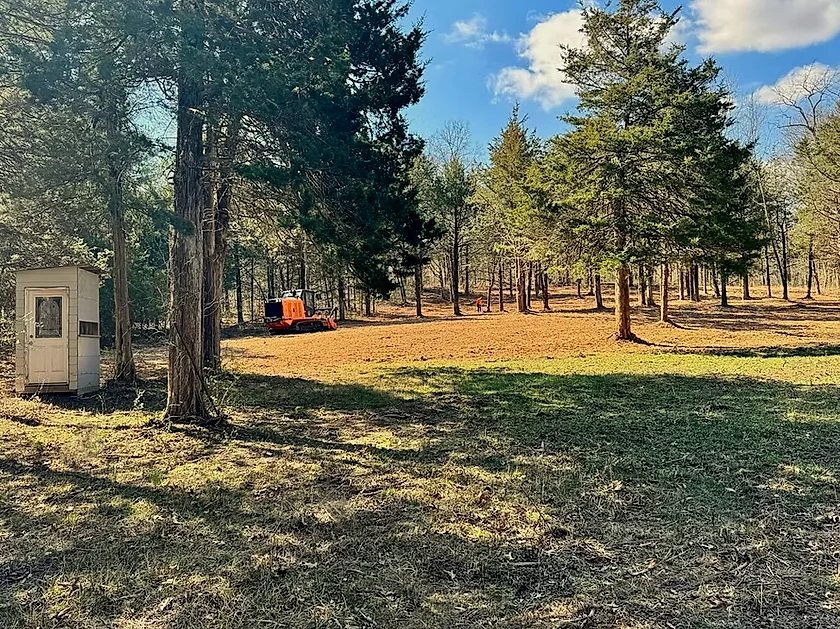
A forestry mulcher’s tree-size capacity depends on its exact attachment, carrier, and operating requirements. A manufacturer’s maximum is not a promise for every tree or every job. The tree’s diameter, condition, surroundings, and the result you want all matter when choosing how to clear it.
Tree size is one of the first things property owners ask about when planning forestry mulching. It is also one of the easiest details to oversimplify. Two machines called “forestry mulchers” may have very different capabilities.
If you are looking at a mix of brush, saplings, and larger trees, start by separating those categories. You do not need to become an equipment expert. You do need a clear discussion about which material will be mulched, which trees will remain, and which parts of the project need a different approach.
Read the rating for the actual attachment
As one manufacturer example, Bobcat lists loader-mounted drum mulchers for trees and brush up to 8 inches in diameter, while its compact-excavator drum category lists up to 5 inches. These are product-category specifications, not Wildwood Forge equipment ratings or a guarantee for your property.
The useful lesson is that the attachment and carrier must be considered together. Ask the contractor which setup is proposed, what material it is intended to handle, and how its limits affect the scope. A number taken from a different product’s advertising does not answer those questions.
Further reading: Bobcat: mulcher and chipper attachment specifications
Describe diameter, condition, and surroundings
A tall, slender stem and a short, thick trunk can create very different clearing questions. When describing trees for an estimate, provide wide photographs that show the entire setting and closer photographs that help communicate trunk size. If you can safely measure a trunk from the ground, identify where you measured it rather than assuming all measurements mean the same thing.
Also mention leaning or damaged trees, nearby structures, fences, overhead lines, and other features you know about. Do not enter unsafe growth or approach a hazardous tree just to collect a measurement. An initial photo conversation can identify where an on-site look is needed.
The space around a tree matters to the work plan. A tree standing in an open patch is not the same situation as one crowded against a building or the trees you want to keep. Make those constraints visible early instead of treating diameter as the only deciding factor.
Taking a tree down and processing it are different
A question about “handling” a tree can mean several things: cutting the standing stem, processing the wood into smaller material, or dealing with what remains at ground level. Spell out which result you need. Otherwise, two answers about the same tree may be describing different work.
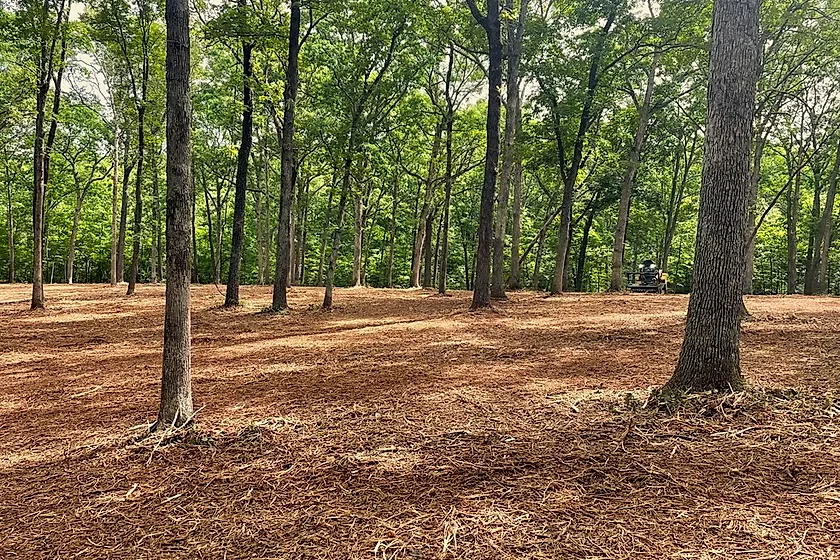
For example, an access project may focus on opening a usable route while keeping the surrounding woodland. A future building area may have a different requirement for roots, stumps, and the final surface. Forestry mulching should not be assumed to include excavation or removal of every root.
Before comparing estimates, ask what will remain, where the material will go, and how anything outside the mulching scope will be addressed. That discussion is more valuable than simply selecting the largest diameter number advertised.
Build the plan around the trees you want to keep
Many landowners want the understory opened while preserving the character of their woods. If that is your goal, make a retained-tree plan before work starts. Clear, agreed markings are easier to follow than a general instruction to “keep the nice ones.”
Point out particular shade trees, screening, access pinch points, and areas you want left alone. If you are unsure about tree health or long-term woodland decisions, ask whether a qualified arborist or forester should help evaluate those questions before the clearing scope is finalized.
- Which trees and patches of vegetation are definitely staying?
- Which stems are part of the mulching scope?
- Are there larger or hazardous trees that need separate evaluation?
- What will remain around the base of retained trees?
- What surface condition is needed for your next use of the land?
Plan the whole property, not just the largest tree
A few oversized trees do not describe every acre around them. Equally, a property with mostly small brush should not be planned around the assumption that every remaining obstacle is easy. Send photos showing the range of conditions so the work can be divided into sensible areas.
Wildwood Forge helps landowners across Southern Illinois and Western Kentucky evaluate forestry mulching and land clearing projects. Tell us your location, what you want removed, and what needs to stay. A free project estimate starts with those goals and the actual conditions on your property.